Choosing a winter cycling training camp in Spain is not simply a search for the warmest place on a weather app. A useful camp needs roads that work on tired legs, harder routes when the group is ready, sensible recovery options and enough flexibility to change the plan when the wind or rain arrives.
That is why the right location depends on the purpose of the week. A club preparing for early-season races needs something different from friends who want long, steady kilometres after a wet winter at home. Both can train well in Spain, but they may not need the same region or the same daily structure.
From our base in Jávea, we use the Costa Blanca as a working training ground rather than a collection of famous climbs. Coll de Rates matters, but so do the quiet approach roads, the smaller valleys and the easy coastal routes that allow the hard days to have a purpose.
Spain is not one cycling destination
“Cycling training camps in Spain” covers several very different places. Mallorca has a huge road-cycling reputation and an excellent mixture of flatter roads and mountain riding. Girona combines demanding inland terrain with a lively cycling culture, although its position in northern Spain means winter can feel cooler than riders expect. Tenerife and Gran Canaria offer reliable climbing and usually warmer conditions, but almost every ride involves elevation and the island journey adds another step to the logistics.
Andalusia can deliver long climbs, open roads and beautiful winter riding. The distances between bases and key routes, however, need to be understood before booking. A hotel that looks close on a map may not put the best riding directly outside the door.
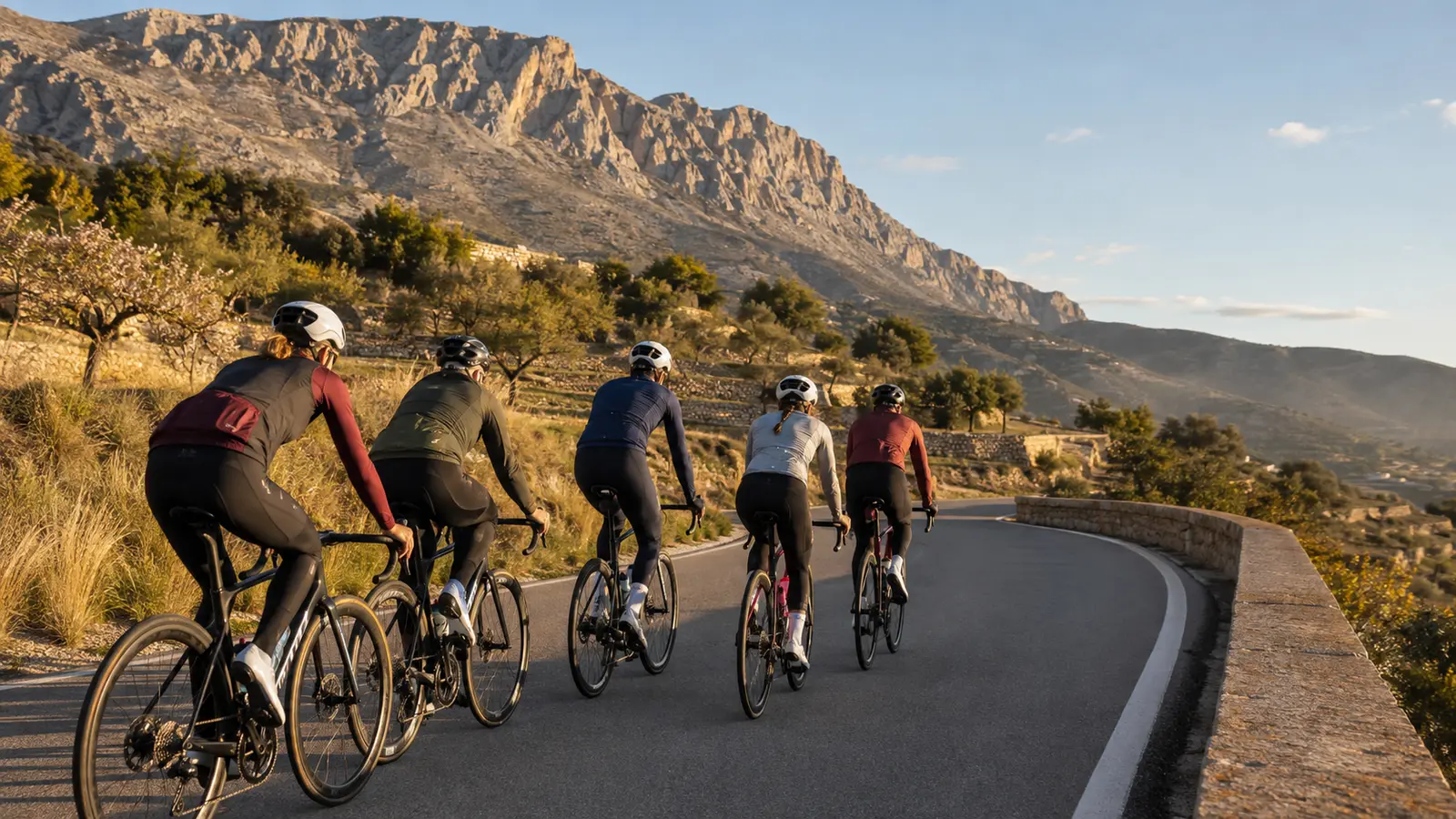
The Costa Blanca sits in a useful middle ground. It is easy to reach through Alicante or Valencia, it has a dense network of paved roads, and groups can choose between coastal riding, rolling inland terrain and recognised mountain climbs. That range is more important over six or seven days than having one spectacular road for the brochure.
Winter training works when routes remain flexible
Winter on the Costa Blanca is normally mild enough for consistent road riding, but no honest organiser should promise sunshine for every hour of every camp. There can be cold mornings, wind and occasional wet days. The advantage is the number of alternatives available when conditions change.
A strong northerly wind may rule out one exposed coastal section while leaving a sheltered inland loop usable. A group carrying fatigue can remove a climb without turning the ride into a short lap around town. If the weather clears later than expected, the start can move without losing the whole day to a long vehicle transfer.
The region is also hilly without requiring extreme altitude. Climbs begin close to towns and valleys, so a ride can combine sustained efforts with useful kilometres before and after. This makes it possible to train endurance, climbing and group discipline in the same week instead of repeating one type of session.
Jávea offers the Costa Blanca without living in a cycling queue
Calpe is the best-known winter cycling base in the area, and for good reason. It has immediate access to the mountains and a large cycling infrastructure. Jávea gives riders access to much of the same wider region but with a different feel.
The first part of the day can pass through the lanes around Jesús Pobre, Gata de Gorgos and the Montgó rather than joining a steady stream of training groups. Routes can then continue towards the valleys around Orba, Parcent, Pego or the coast, depending on the goal. For smaller clubs and private groups, that quieter start makes it easier to keep the week personal and to adjust the pace without feeling part of a rolling event.
Jávea is not better because it is less famous. It is simply a strong choice for riders who want the Costa Blanca terrain while staying somewhere that still feels like a town rather than a winter training village.
One base, several very different kinds of day
A sensible training week does not chase a summit every morning. Around Jávea, the easier lanes towards Jesús Pobre and Gata can form a genuine recovery ride. The inland roads towards Pedreguer, Alcalalí and Orba add rolling endurance terrain, while longer routes towards Pego move the group towards more serious climbing.
Coll de Rates and Bèrnia can sit at the centre of a climbing day, but they create different efforts. Rates is steady enough for controlled pacing or repeated work. Bèrnia is more irregular and asks riders to manage changes in gradient. Cumbre del Sol provides a shorter, sharper test much closer to the coast.
For a bigger mountain day, Vall d’Ebo and El Miserat take the group farther inland. Vall d’Ebo rewards rhythm. Miserat is a much more selective climb and should only be included when fitness, gearing and road conditions are right. The hardest road is not automatically the most useful training road.
This variety also helps mixed-ability groups. Riders can share the first part of a route, separate for an extension or additional climb, and regroup later. Good planning keeps the social side of the camp without forcing every rider into the same workload.
What a winter training week could look like
The exact order should follow the group, the weather and the reason for travelling. A practical seven-day outline might use the following rhythm:
The long day does not have to be Saturday, and the hardest climb does not belong on the schedule simply because it is famous. We prefer to keep the outline movable until the forecast and the riders have both shown us something useful.
Bring winter kit, even when travelling south
A warm afternoon can follow a cold start, and mountain descents cool riders quickly. Arm warmers, a packable jacket, light gloves and a rain layer deserve space in the bag. Daytime lights are useful on shaded inland roads, while suitable gearing matters more than an aerodynamic-looking cassette. For most recreational riders, a compact chainset with a 30, 32 or 34-tooth easiest sprocket makes the week far more productive.
Groups should also be realistic about starting fitness. A winter camp can build form, but it cannot replace the preparation needed to ride several consecutive days. Tell the organiser about normal weekly distance, recent training, descending confidence and any rider who may need a shorter option. That information produces a better camp than an impressive list of climbs.
Winter cycling camps in Spain: quick answers
When is the best time for a winter camp on the Costa Blanca?
Road cycling is possible throughout winter, but the right dates depend on the group’s goals and tolerance for cooler mornings. Flexible route planning matters more than choosing a supposedly perfect week.
Do I need to be a racing cyclist?
No. A camp can suit club riders, sportive riders and small groups with a shared fitness goal. The important point is that daily distance and climbing are matched to the group.
Can riders of different levels train together?
Yes, when routes include regroup points, shorter options and optional extensions. It works best when differences in fitness are discussed before the trip.
Is Jávea suitable for a cycling club camp?
Yes. Jávea provides access to coastal, rolling and mountain routes, with Alicante airport serving as the most convenient arrival point for many groups.